It started with kids building video games.
UME's origins were in teaching children design thinking through video game development. We wanted students to learn by creating something meaningful to them, not by following disconnected lessons or watching demonstrations.
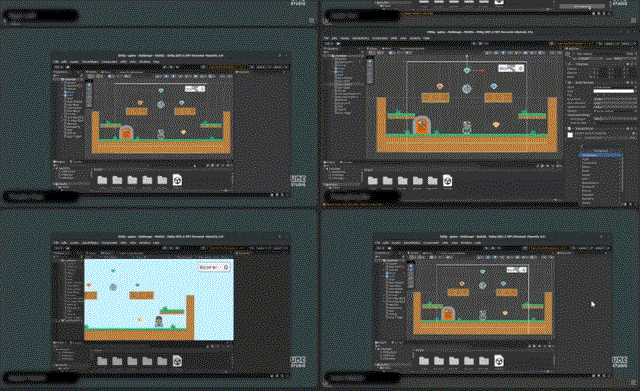
Learning works better when the outcome matters.
That shaped how we teach. We connected technical concepts to outcomes students cared about, which gave them a reason to learn, experiment, and keep improving their work.
We still teach this way. Every program is built around a project the team cares about, so the concepts have somewhere to land.
- Learn by building
- Outcomes the learner cares about
- Iterate on real work
We built the platform our students needed.
-
Real tools
What they neededReal development tools, without complicated installations or hardware.
What we builtWorkstations that run in the browser, with the software already on them.
-
Over-the-shoulder help
What they neededInstructors who could see what each student was doing.
What we builtAn instructor view of every workstation, and the ability to step in and help.
-
Building together
What they neededStudents playtesting each other's games and sharing feedback.
What we builtShared sessions where anyone can show their work and others can join in.
-
Privacy and security
What they neededWe worked with children, so privacy and security came first.
What we builtBoth designed in from the start. Today's controls are on our Security page.
Adults learning complex technology face the same challenges: the right tools, relevant projects, expert help when they get stuck, and peers to work with.
Helping people when they get stuck.
We carried out research with the University of British Columbia on how people learn new technologies. It shaped our frameworks for understanding participation, recognizing signs that someone may need help, and offering assistance in context, and it continues to inform how we develop our AI capabilities.
Replay applies the same idea: a participant who missed an explanation can return to it, then go back to learning by doing.
- Headquartered in Vancouver
- Delivering globally
- NVIDIA Education Partner
The people behind UME.Studio.
- Co-founder & CEO
Daniel Roizman
Daniel draws on a career in visual effects, software development, and applied research to connect emerging technology with business needs. He guides company strategy, product direction, and relationships with key partners. His focus is on building lasting value for customers through technology and services that address meaningful business challenges.
- Co-founder & CTO
Jean Mistrot
Jean leads technology strategy and architecture, drawing on experience in software engineering, technical direction, and product development. He has built tools and led technical teams across creative industries, balancing ambitious ideas with production requirements. His background in teaching helps him translate complex concepts into clear engineering decisions and tools people can use effectively.
- Head of Platform
Graham Still
Graham leads platform development, turning product priorities into reliable software and a consistent user experience. His background in full-stack engineering, computational linguistics, and teaching informs both the systems he builds and how people interact with them. He guides the development team across platform infrastructure, learning tools, and AI features that support practical work.
- Head of Strategic Partnerships & Operations
Elin Anderson
Elin leads strategic partnerships and company operations, bringing more than two decades of experience managing complex productions and multidisciplinary teams. She connects partner relationships with the people, processes, and resources needed to deliver. Her work spans reseller development, talent acquisition, and coordination across projects, keeping commitments aligned with the team’s capacity.
- Lead Instructor
Colin Jenken
Colin leads hands-on instruction, helping learners connect technical concepts with practical workflows. His background in visual effects, technical direction, and production pipelines brings real production experience into the classroom. He develops curriculum, creates educational content, and guides teams through unfamiliar tools with a focus on clear explanations, practical experimentation, and skills they can apply.
From game design to physical AI.
The subject matter changed, from video game design to advanced computing, digital twins, and physical AI. The underlying principles did not.
Today UME.Studio brings that methodology and platform to organizations building advanced technical capabilities. We design and deliver our own curriculum, and combine hands-on learning, collaborative workspaces, and accessible computing environments so teams can move from understanding a technology to applying it.
The tools have evolved. The way people learn and work together remains at the heart of UME.
- Our own platform
- Our own curriculum
- In our cloud or on your infrastructure

Start the conversation.
Partnership, press, or investment enquiry? Tell us what you are looking for.